
From a Chippewa Address to Its Owner
The route from an address to an owner of record takes three steps. Identify the tax parcel. Read the current owner entry. Then pull the recorded deed as the strongest title clue. In Chippewa County, the Catalis tax portal supports searching by address, owner name, or parcel number. The county GIS map places the parcel on the ground. The Register of Deeds holds the recorded instrument whenever the legal interest itself matters.
Keep the name and the parcel description side by side. A trust or company name may not match the person who actually signs for it. An estate often appears through its personal representative. Treat these as reasons to verify the record. Do not treat them as proof that someone different owns the land. A quick property search that skips this comparison can mislead you.
- Search Catalis by site address or parcel number and note the owner name as displayed.
- Compare situs, mailing address, municipality, tax district, and legal description.
- Use County Web Mapping to locate the same parcel and check its position.
- Search the newest deed by the owner, grantee, or legal description.
- If an entity is named, check Wisconsin DFI for its legal name and registered agent, while treating the agent as a contact rather than an owner.
Chippewa County Tax Roll Owner Entry
The county's own Catalis instructions describe searching by owner last and first name. The portal does not publish the exact field label on a live parcel card. So treat the visible result as the tax-roll owner or taxpayer entry rather than an independent title finding. That distinction matters.
Chippewa County advises entering less text when a search stalls. Names can carry initials, punctuation, a trust suffix, or a corporate ending. Search the smallest useful form first. Then compare the site address and parcel number. A name-only match is weak when one person or business holds several parcels in the county.
Start at the Chippewa County Catalis guest portal to locate the tax-roll owner.
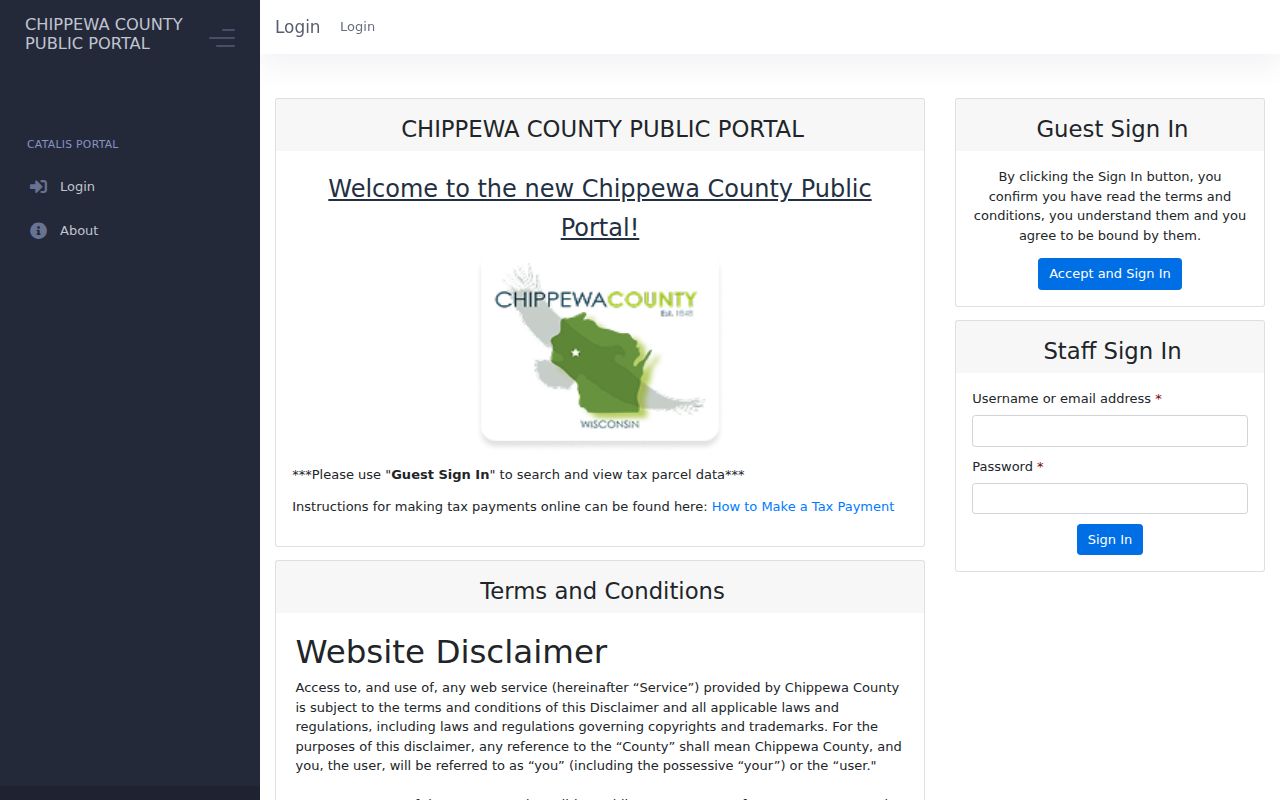
Note: The official Catalis page displays the guest sign-in screen only, without a live owner card or the exact owner field label.
Where Chippewa County Owner Names Appear
Different records name different roles in a Chippewa County property search. The tax roll lists the account name. The newest deed names the grantee. An entity search can surface a registered agent. The GIS map ties a name to the land itself. No single record answers every question. Pick the source that fits yours and check it against the parcel description.
| Source | Owner Info It Gives | Access |
|---|---|---|
| Catalis tax parcel | Tax-roll owner and mailing/situs context, if shown | Guest sign-in |
| Register of Deeds | Grantee named in a recorded instrument | Paid remote search or free office terminal |
| Wisconsin DFI | Entity name, status, filing history, and registered agent | Public online search |
| County GIS | Mapped parcel location and identify result | Public web map |
The owner of record may not live there. Parcel rolls and deeds in Chippewa County capture who holds title, not who is physically on the land. The mailing address is where tax notices go. It can differ from the site address, especially for owners who live far away. Trust the printed name as it appears. Resist swapping in a suspected individual. When a deed names an LLC, DFI can confirm the entity's legal status and registered agent. That does not show which member benefits. Trusts call for close reading of the trustee language and comparison with later instruments. Estate transfers are clearest in the personal representative's deed and the probate file, since a public court summary alone may lack the full record.
Mailing Address and Situs in Chippewa
Situs is the physical location of the land. The mailing address is the destination for tax notices. Chippewa County's own search workflow warns that the two can differ, particularly when the owner lives elsewhere or holds title through a trust, company, or estate. Never pass off a tax mailing address as the property location. A postal city can even cross a county line. Stanley, for example, lies partly in Chippewa County. Use the municipality and tax district to see which local jurisdiction applies. The county's municipality code and GIS boundary can confirm the matching parcel sits in this county before a deed is ordered.
Confirm a Chippewa Owner With the Newest Deed
The Register of Deeds records the instrument naming the parties. Once you have the tax parcel, pull the newest deed. Compare the grantee, document date, parcel, and legal description. A deed newer than the tax entry may be the more current ownership clue. Chippewa County publishes no set number of days for tax-roll updates after recording. Treat the online index as a working copy. Errors and gaps happen. A free public terminal is available at the Register of Deeds office. Remote Tapestry access is paid. Ordering a document image and obtaining a certified copy are separate steps. Completing a legal title review is separate as well. A current owner record check hinges on one step. Weigh the tax roll against the latest deed in Chippewa County records.
Trusts, LLCs, and Estates in Chippewa
Some Chippewa County deeds name a trust, an LLC, a corporation, or an estate. Others name no living person at all. That is normal. The ownership trail still starts with the deed and the parcel description on file with the county. Those remain the legal source for who holds the land. To learn more about the entity itself, run the exact legal name through the state's DFI Corporate Records Search. It returns identity, status, registered office, agent, and filing history. A registered agent accepts legal papers for the entity. That role alone does not make the agent the owner of the parcel. Keep the two ideas separate.
Probate records explain how land passed after a death. Chippewa County's Register in Probate sits in Room 203. The address is 711 N Bridge Street, phone 715-726-7737. WCCA can show public estate case summaries. The full estate file must be requested from the probate custodian, though. It may contain restricted material that limits what you can view.
Use the official Wisconsin DFI entity search as an identity cross-check, not a land-records substitute.
The Wisconsin DFI advanced entity-search page displays the public company lookup fields described above.
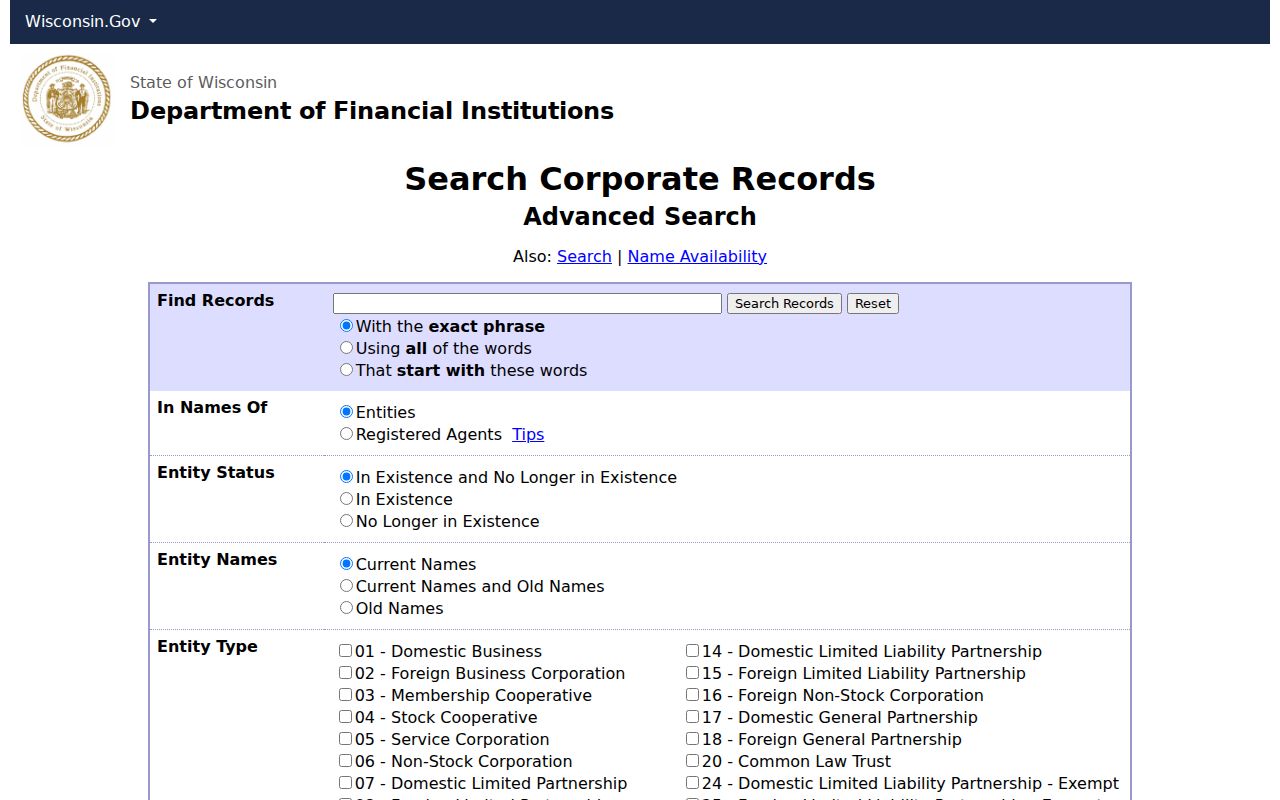
This screen answers one question: is the entity filing current and who is its agent? It will not return a Chippewa County parcel owner or a beneficial ownership result.
Chippewa County Owner-Name Alert
The county-linked Property Fraud Alert service offers a quiet safeguard. Register a name. The service then sends notice if that name appears on a document recorded in Chippewa County. A personal name, a trust, or a business name all work. The service is free. It has limits worth knowing. The service cannot stop a filing. It cannot prove a document is fraudulent, and it cannot promise to catch every name variation.
If an alert arrives, stay calm and compare the recorded document number against the parcel. Then call the Register of Deeds. A name match alone is not evidence of a transfer. The recorded instrument and its legal description hold the real answer.
Register through the county-linked Chippewa Property Fraud Alert.
Alerts trigger on names. Because of that, consider separate registrations for a personal name, a trust, and a business name used in recorded documents. The service is a notification layer sitting on top of the recording process. It does not replace periodically checking instruments yourself. Confirm any match by document number with the Register of Deeds. Only then draw a conclusion about Chippewa County property records.
Protected Wisconsin Property Addresses
Wisconsin's Safe at Home program, created under Wis. Stat. §165.68, gives qualifying participants a substitute address. Agencies must protect the actual address within the program's rules. Do not try to reverse a shielded location. Do not republish an address that appears protected. If a record raises a privacy question, contact the custodian and follow its instructions.
Owner information supports lawful property diligence and civic research. It does not identify every resident, and it never grants permission to contact someone in a threatening or intrusive way.
Limits of a Chippewa Owner Lookup
A tax roll name proves nothing by itself. Neither does a deed index hit or a mapped parcel. The owner may hold the land through an entity or trust, and a fresh transfer can lag before it reaches the tax roll. A map shows boundaries, not occupants. Read the actual deed, and bring in a title professional when legal certainty matters.
When sources disagree on a name, split the question into parts. Which party appears on the tax account? Which grantee does the newest recorded deed name? Which DFI filing matches that grantee? Record each source and its date instead of collapsing them into one presumed owner. The tax portal and the Register of Deeds answer different halves of the lookup, while DFI confirms business registration rather than the land interest itself.
An LLC on the tax roll deserves a closer look. Check the exact punctuation and suffix in both the deed and the DFI record, since small differences can hide real ones. A registered agent receives legal notices for an entity. Presenting that agent as the individual owner of its real estate would misstate the record. Similarly, a trustee or a personal representative signs under a fiduciary role, not personal ownership. These distinctions matter whenever a Chippewa County search result gets repeated or cited.
Lawful use. A Chippewa County owner lookup is for property research, purchase diligence, and civic review. Do not use the information to stalk, harass, intimidate, or harm anyone.